StreetEasy is Zillow's NYC rental and sales marketplace. The existing rental advertising model was simple but inefficient: high-value listings were under-monetized, agents had limited flexibility, and the optional boost product had ~5% adoption. The team framed this as a pricing problem — tweak the existing pricing model. After talking to agents, I saw it differently: they weren't pricing-resistant, they were thinking about urgency, time-to-rent, and contextual investment. The product didn't match their mental model.
Played a high-influence role in redirecting a strategy-ops-led approach toward a consumer-journey-driven, tiered advertising model that surpassed the initial annual revenue goal by $XM. Led a $XM+ premium ad launch and helped reshape the monetization strategy around stronger value-to-price alignment.
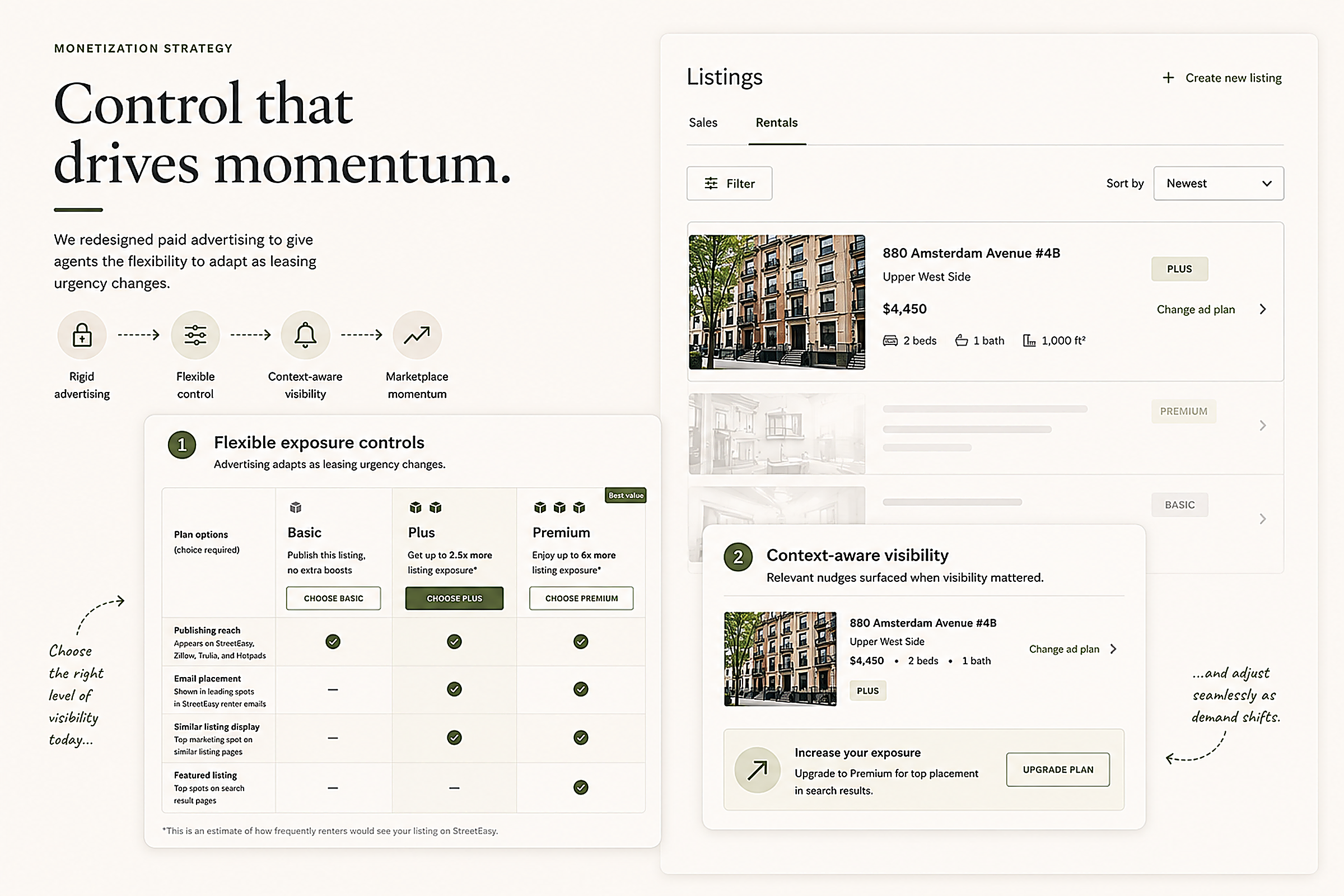
Led the 0→1 launch of a tiered ad product — Base, Mid-tier, Premium — designed to make monetization feel like control rather than cost. Drove cross-functional execution across Product, Engineering, Design, Marketing, and Strategy. The strategic bet: design the mid-tier as the recommended option and pair the model with personalized consumer discovery so an agent's investment translated into more relevant impressions. Partnered closely with the VP and Director of Strategy on pricing model decisions and influenced the call to not launch the ad product on mobile apps — protecting revenue from Apple's platform fees while preserving monetization economics.
We redesigned rental advertising around agent intent and timing, not just pricing.
- Tiered value architecture: plans built around urgency and investment levels, not "pay more for more."
- Pay-per-day flexibility: no minimum spend; agents paid only for the days they wanted exposure.
- Personalized nudges: upgrade prompts triggered by listing signals (e.g., a listing sitting unrented past 2 weeks) — so agents acted at moments of real urgency.
- Lifecycle scheduling: agents could pre-schedule auto-upgrades and downgrades, aligning spend with how each listing moved through its lifecycle.
- Clearer value communication: tradeoffs between tiers presented so agents could choose with confidence, not confusion.
- Consumer-aware monetization: premium exposure paired with renter behavior signals — improving relevance while protecting the consumer experience.
A foundation for premium offerings
Created a tiered structure that paved the way for bundling high-value features agents had been requesting for years into the premium tier.
A shift toward customer-led monetization
Changed how Strategy and User Research approached advertising — moving from pricing-first decisions to value proposition, customer motivations, and more personalized purchase nudges.
A path to future AI-powered offerings
Created the strategic foundation for defining virtual staging as a premium offering within the highest tier.